In November 2025, the Government of the United Republic of Tanzania (through the Vice President’s Office) published the National Adaptation Plan (NAP) 2025–2035, a 10-year roadmap that sets out how Tanzania will reduce climate vulnerability and build resilience across the economy and communities.
This is not just a policy document. It’s a practical national investment and implementation framework that will increasingly shape how projects are planned, financed, designed, and monitored, especially in climate-sensitive sectors.
WHY THE NAP MATTERS RIGHT NOW
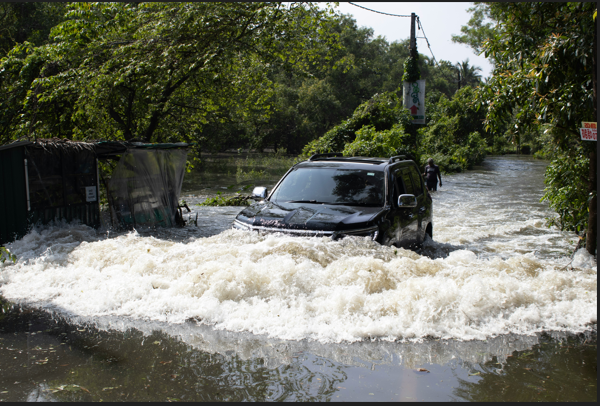
Tanzania is already facing climate impacts that disrupt lives and development gains, more frequent and severe floods, prolonged droughts, temperature extremes, and sea-level rise.
The NAP highlights that climate change impacts are interconnected and can cascade across sectors—affecting water availability, agriculture and livestock productivity, fisheries, public health, infrastructure performance, coastal assets, tourism, and ecosystems.
It also notes projected warming, with temperature rise estimated at about 1.4-2.3°C by 2050, alongside rainfall variability, longer dry spells, and coastal erosion and saltwater intrusion.
WHAT THE NAP 2025–2035 COVERS
The NAP covers the period 2025–2035 and is designed to integrate adaptation into national and local development planning, aligned with Tanzania Development Vision 2050, Zanzibar Development Vision 2050, and the SDGs.
1) Nine priority sectors
The plan provides risk and vulnerability assessment and response options across nine priority sectors:
- Agriculture
- Livestock
- Fisheries
- Water
- Health
- Tourism
- Wildlife
- Infrastructure & Human Settlements
- Coastal & Marine Resources
 Infrastructure & Human Settlements is among nine priority sectors for risk and vulnerability assessment in Tanzania’s National Adaptation Plan. Other are Agriculture, Livestock, Fisheries, Water, Health, Tourism, Wildlife, , and Coastal & Marine Resources.
2) Clear National objectives (what success looks like)
The National Adaptation Plan (NAP) is basically trying to make sure Tanzania is better prepared for climate changeand can recover faster when floods, droughts, heat, or other climate problems happen. In practical terms, it wants to:
- Help people, businesses, and nature cope betterwith climate change, using solutions that are planned and led locally, with everyone included.
- Make climate protection part of normal government work, so adaptation is built into policies, development plans, and budgets at national level, in each sector, and in local councils.
- Improve coordination and leadership, so government agencies and partners work together smoothly instead of duplicating efforts.
- Bring in the resources needed money, technology, training, and skills to implement the most important adaptation projects.
- Protect the most vulnerable people, by making sure adaptation programs consider women, people with disabilities, and other groups who are often left behind.
3) Cross-cutting priorities that apply to every sector
The NAP also highlights five important things that every sector should pay attention to and include in their work:
- Making sure women and people who are usually left out are included
- Dealing with risks and dangers from disasters
- Using new technology and encouraging research
- Helping people and organisations learn new skills
- Finding the money needed to make these plans happen
THE INVESTMENT SCALE: A NATIONAL ADAPTATION PROGRAMME PIPELINE
One of the most important messages in the NAP is that adaptation is not a “small add-on”, it is a major national investment agenda.
The document proposes implementation of 36 key national adaptation programmes i.e., 22 for Mainland Tanzania, 12 for Zanzibar, and 2 cross-cutting programmes.
It also provides indicative financing needs: total cost of adaptation projects is estimated at USD 37 billion, with USD 28 billion for Mainland Tanzania, USD 8.6 billion for Zanzibar, and USD 0.8 billion for cross-cutting actions.
Notably, the NAP flags that a few large programmes account for a big share of the budget, for example, major Mainland programmes such as:
- Climate-proofing critical economic and social infrastructure
- Agricultural water security & irrigation modernization
- Climate-resilient water supply and sanitation services
- Resilient urban planning and informal settlement upgrading
For Zanzibar, the NAP highlights major programmes including:
- Enhancing comprehensive coastal resilience
- Climate-resilient urban, port and transport infrastructure
- Climate adaptation for cultural heritage and Stone Town
WHAT THIS MEANS FOR DEVELOPERS, MUNICIPALITIES, AND INVESTORS
As Tanzania operationalizes the NAP, we expect three practical shifts across projects and investments:
1) Climate risk screening becomes standard practice
Projects in the nine priority sectors will increasingly require explicit climate risk assessment not just “baseline climate description,” but hazard-exposure-vulnerability analysis and clear measures to reduce risk over the project life.
2) “Resilience-by-design” affects engineering decisions
Adaptation is not only policy; it changes engineering and planning choices such as drainage capacity, flood routing, material selection, heat stress controls, water storage, coastal setbacks, nature-based buffers, and redundancy planning, especially for infrastructure and settlements.
Engineers must implement “resilience-by-design” principles, adapting infrastructure and urban planning to address climate risks to ensure safer, climate-resilient communities
3) Funding will favour bankable, measurable adaptation
The NAP emphasizes implementation arrangements, funding sources, and a monitoring and evaluation approach with performance indicators. In practice, this means investors and climate finance windows will increasingly favour projects that are well-scoped, costed, safeguard-ready, and measurable.
HOW TANSHEQ LIMITED SUPPORTS NAP-ALIGNED PROJECTS
At Tansheq Limited, we see the NAP as a major opportunity to accelerate resilient, compliant, and financeable development projects across Mainland Tanzania and Zanzibar. We support clients to move from policy intent to implementable action through:
1) Climate risk & vulnerability assessments
- Project-level climate hazard screening (flood, drought, heat, wind, sea-level rise)
- Vulnerability mapping and sensitivity analysis for assets, communities, and ecosystems
- Adaptation options appraisal (including nature-based solutions)
2) Mainstreaming adaptation into ESIA/ESMP and project planning
- Integrating climate risks into ESIA baseline, impact assessment, and mitigation hierarchy
- Resilience measures in ESMPs, OHS plans, and operational procedures
- Stakeholder engagement that meaningfully addresses vulnerable groups (including gender, disability, and social inclusion), consistent with NAP priorities
3) Adaptation programme development and investment readiness
- Concept notes and programme designs aligned with national priorities and sector frameworks
- Costing, implementation arrangements, and practical monitoring indicators aligned with NAP emphasis on MEL
- Support to position projects for climate-related funding opportunities (public, donor, blended finance)
4) Monitoring, evaluation and learning (MEL) support
- Practical indicator frameworks, reporting templates, and performance tracking systems for adaptation outcomes and co-benefits
A PRACTICAL TAKEAWAY
If your organization is planning or operating in agriculture, livestock, fisheries, water, health, tourism, wildlife, infrastructure/human settlements, or coastal/marine systems, the NAP is effectively telling you:
- Adaptation is a core development requirement, not an optional add-on.
- There is a defined national programme pipeline and an indicative financing envelope; and
- Projects will increasingly be expected to demonstrate credible climate risk management and measurable resilience outcomes.
LET’S MAKE YOUR NEXT PROJECT NAP-ALIGNED AND IMPLEMENTABLE
Tansheq Limited is ready to support public institutions, private developers, and development partners to translate the NAP into real, on-the-ground resilience from risk assessment and ESIA integration to programme design and monitoring.
Source: TANSHEQ Limited